RVI Indices Technical Analysis & Relative Vigor Trading Signals
Developed by John Ehlers
The Relative Vigor Index combines the older concepts of technical analysis with modern digital signal processing theories and filters to create a practical and useful indicator.
The basic principle behind it's simple -
- Indices Prices tend to close higher than they open in up-trending markets and
- Indices Prices close lower than they open in down-trending markets.
The momentum (vigor) of the move will therefore established by where the prices end up at the close of the candle. The Relative Vigor Index plots 2 lines the RVI Line and the signal Line.
The RVI index is essentially based on measuring of the average difference between the closing and opening indices price, & this value is then averaged to the mean daily trading range & then drawn.
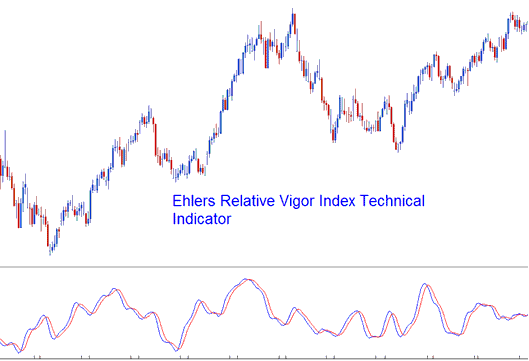
This makes the index a responsive oscillator that has quick turning points which are in phase with the stock indices trading market cycles of indices prices.
Stock Indices Technical Analysis & How to Generate Signals
The Relative Vigor Index is an oscillator. The basic technique of interpreting the index is to use the crossovers of the RVI and the SignalLine. Signals are generated when there is a cross-over of the 2 lines.
Bullish Signals - a buy stock indices signal occurs when the RVI crosses above the Signal Line.
Bearish Signals - a sell stock indices signal occurs when the RVI crosses below the Signal Line.
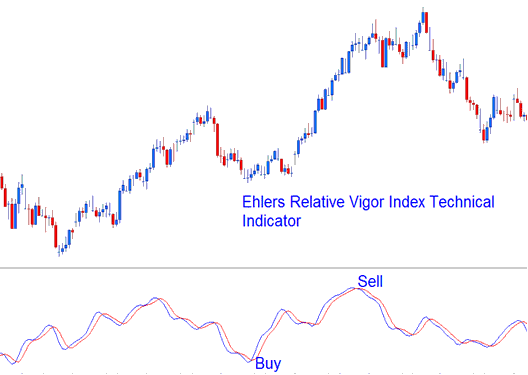
Buy and sell stock indices signals generated using the crossover method